What Exceptional SMP Results Actually Look Like — And How Mitchell Stals Achieves Them
What Exceptional SMP Results Actually Look Like — And How Mitchell Stals Achieves Them
What Exceptional SMP Results Actually Look Like — And How Mitchell Stals Achieves Them
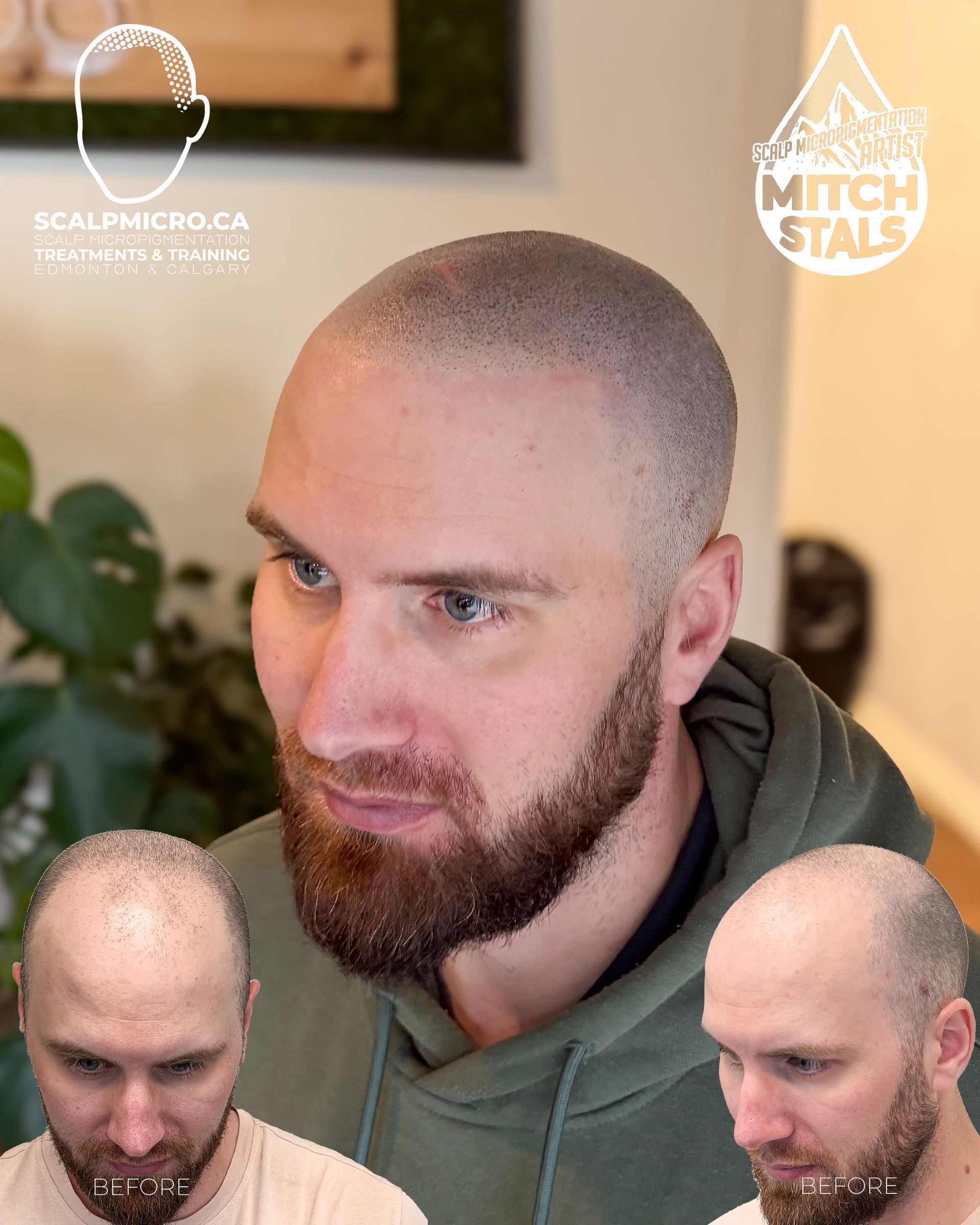
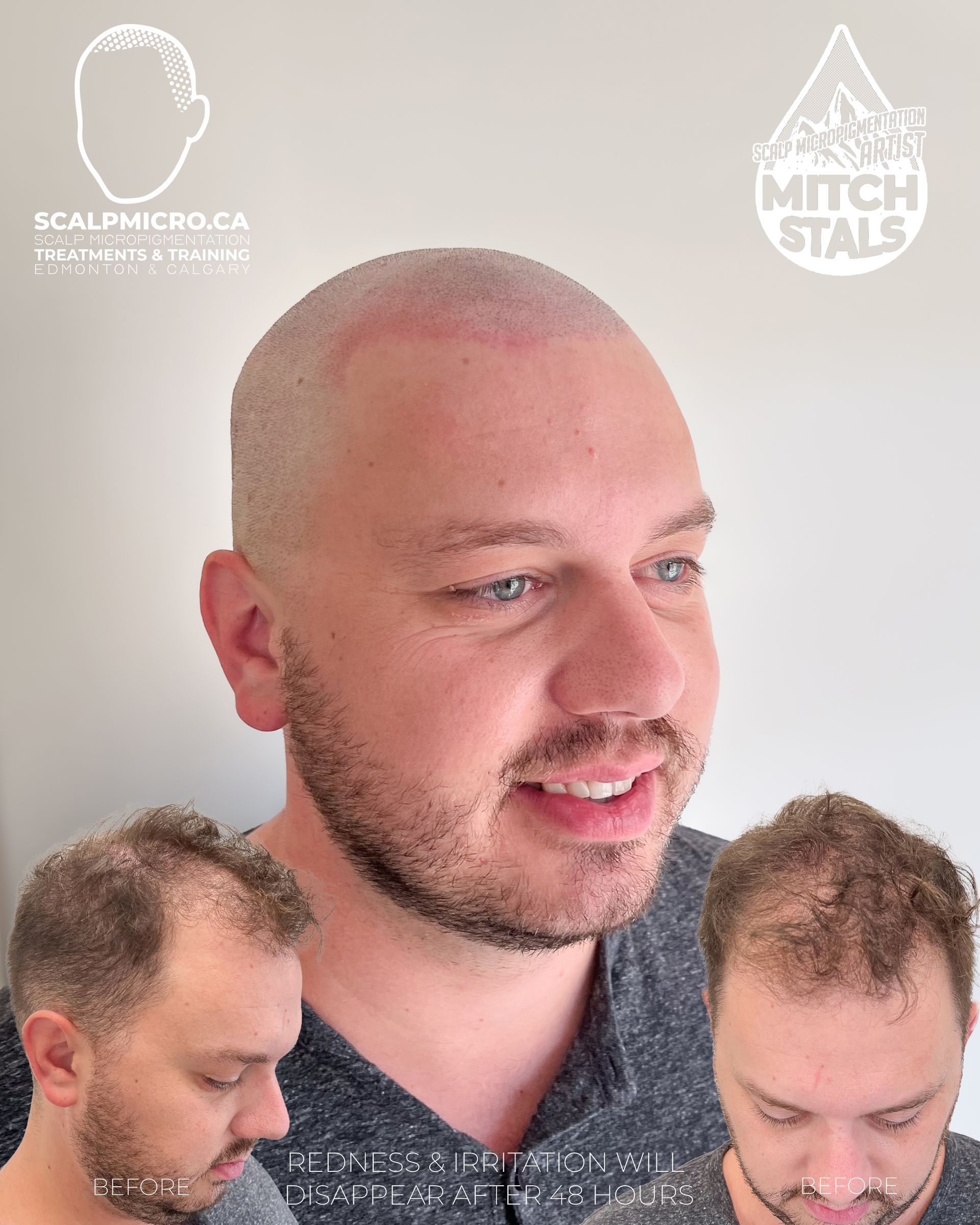
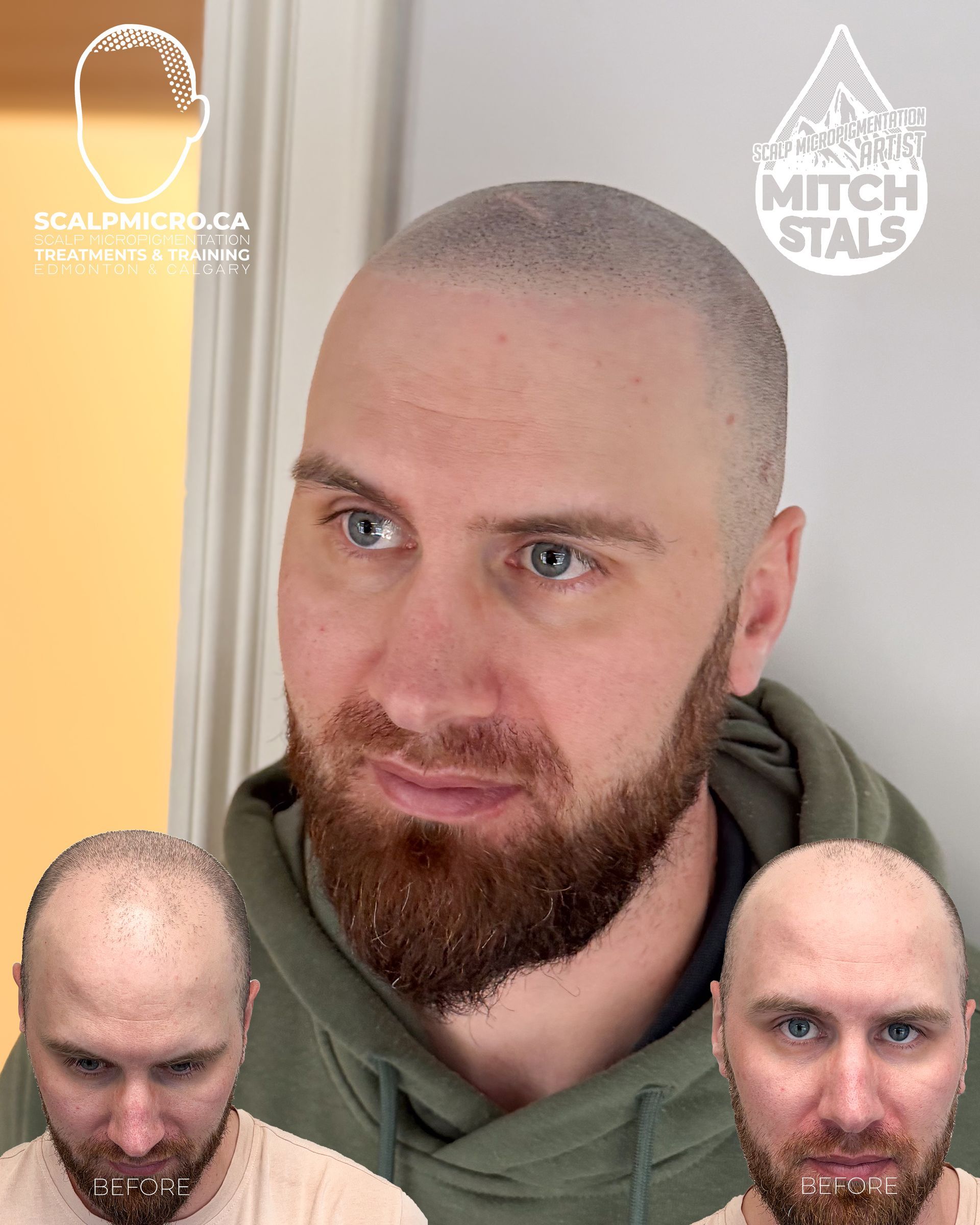
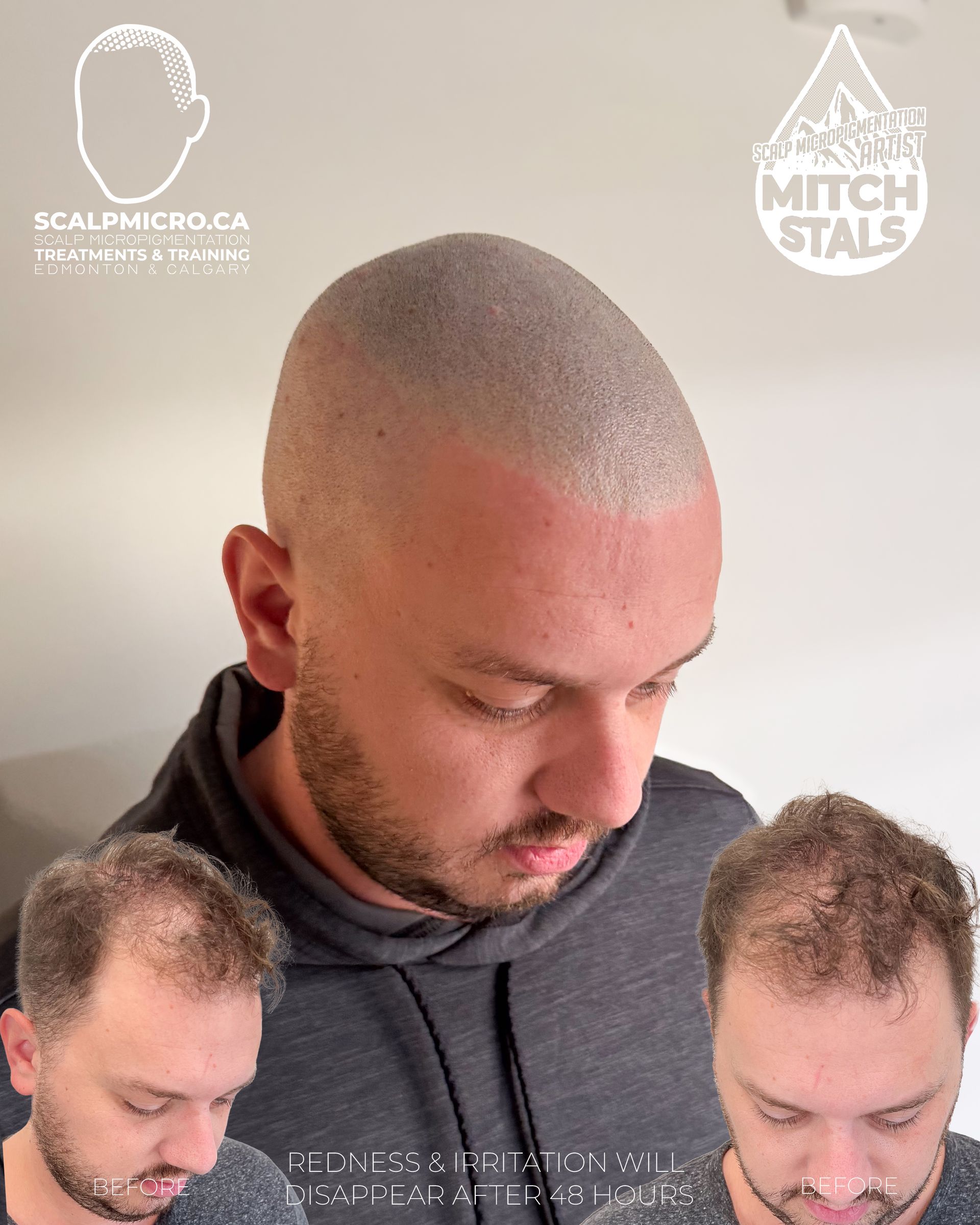
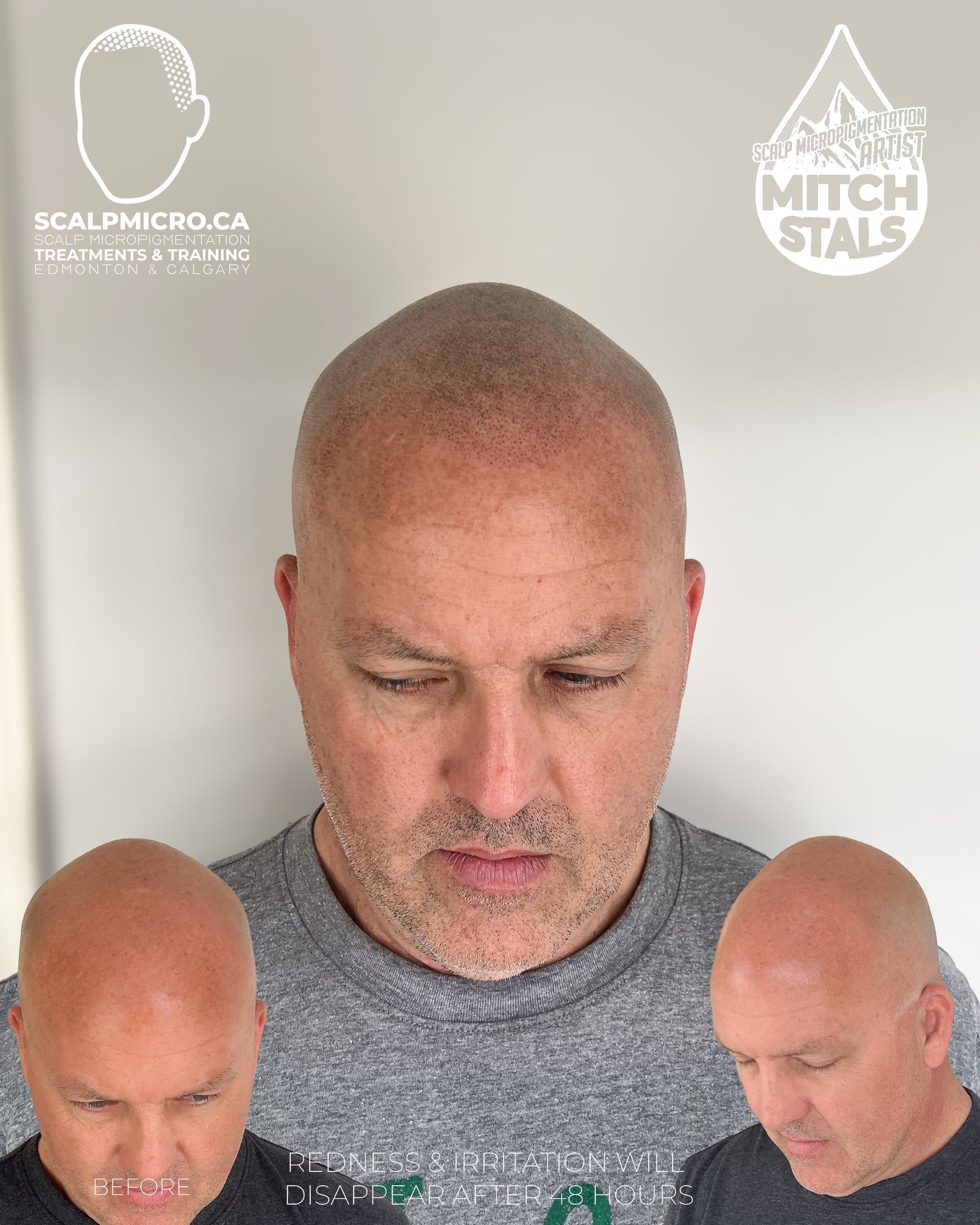
If you've spent any time looking at SMP results online, you've probably noticed a significant range in quality. Some results look genuinely remarkable — so natural that you'd never guess the person had a procedure. Others look noticeably artificial, with hairlines that are too sharp, pigment that's the wrong tone, or dot patterns that don't convincingly replicate real follicles.
The difference between those two outcomes isn't the procedure itself. It's the person performing it.
This post is about what great SMP results actually require — and what Mitchell Stals consistently brings to every client he works with at SCALPMICRO.CA.
The Foundation: Pigment Selection
Pigment is where a lot of SMP treatments go wrong. The temptation is to match the pigment to the client's existing hair colour as closely as possible — but this oversimplifies a nuanced process.
Hair colour and scalp pigment interact differently under different conditions. A colour that looks right when freshly applied can shift as it heals. A tone that works indoors can look off in natural daylight. And over time, pigments that haven't been carefully selected can age in ways that look unnatural.
Mitchell's approach to pigment selection involves assessing not just current hair colour but skin undertone, how the scalp responds to healing, and how the pigment is likely to age. The goal is a result that looks right today, looks right in five years, and doesn't require correction because the colour drifted somewhere unexpected.
The Hairline: Where Art Meets Anatomy
A convincing SMP hairline is one of the most technically demanding aspects of the procedure — and one of the most visible indicators of quality.
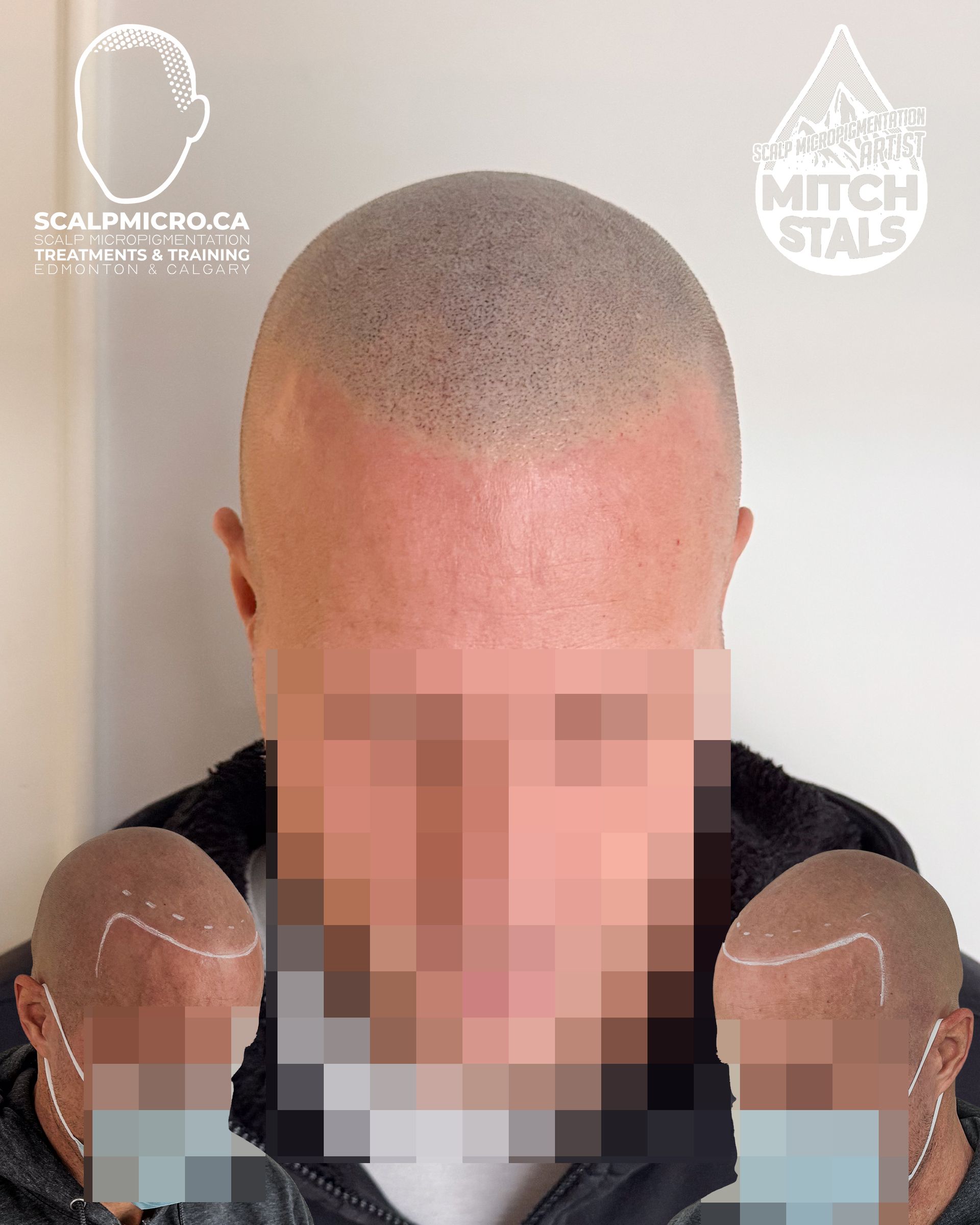
The human eye is remarkably good at detecting something "off" about a hairline, even when a person can't articulate exactly what it is. A line that's too perfectly straight reads as artificial. A hairline drawn too low looks wrong for the client's age. Symmetry that's too exact looks mechanical rather than organic.
Real hairlines are subtly irregular. They follow the natural architecture of the face. They're soft at the edges rather than hard. They respect the relationship between the forehead, the temples, and the overall proportions of the head.
Mitchell designs each hairline individually — working with the client's face shape, age, and the natural remnants of their existing hairline to create something that looks like it simply belongs there. This is the part of SMP that requires genuine artistic sensibility alongside technical skill, and it's the part that clients most often remark on when they see the finished result.
Dot Work: The Technical Core of SMP
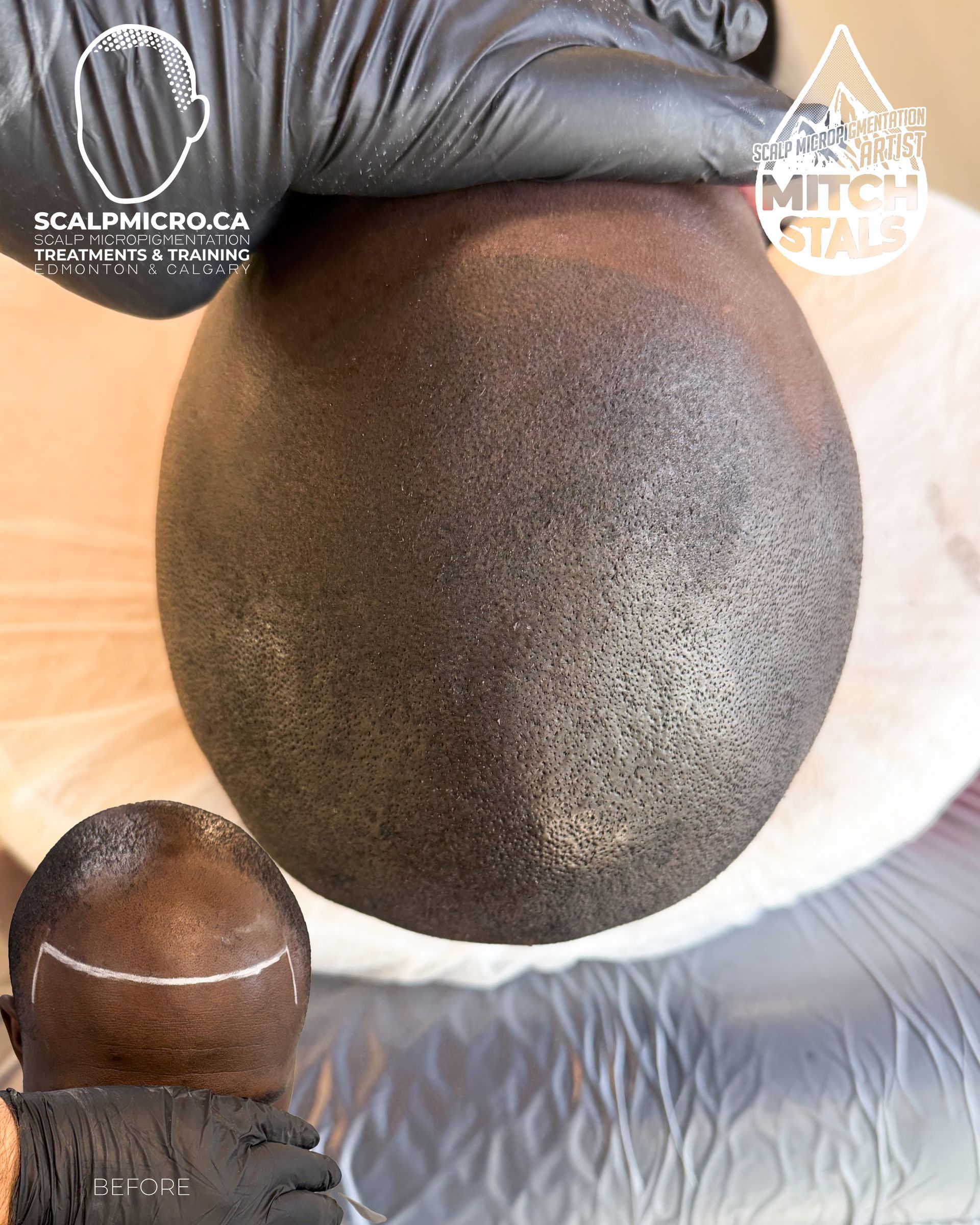
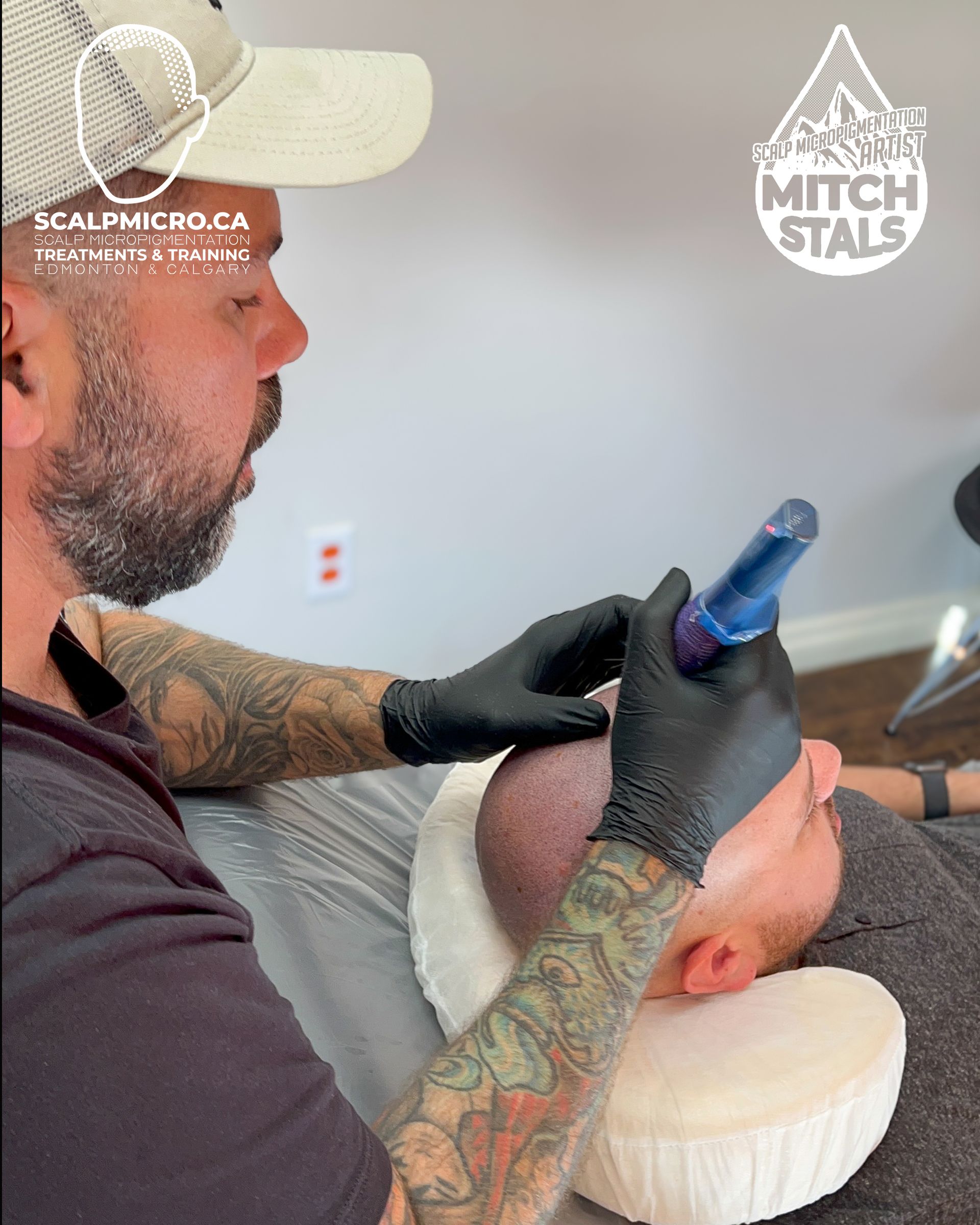
The individual dots that make up an SMP treatment need to vary in size, depth, and spacing to look like real follicles rather than a uniform pattern stamped onto the scalp.
Real hair follicles aren't perfectly consistent. They vary slightly in size and spacing, they grow at different angles, and they create an organic density pattern that the eye reads as natural. Replicating this convincingly requires precise needle control, consistent pressure, and the ability to create deliberate irregularity within a structured overall design.
Mitchell's dot work is characterised by the kind of consistency and control that comes from focused, dedicated practice in SMP specifically — not as one of many services offered, but as the single specialty he has committed to mastering.
Session by Session: Building the Result
One of the markers of quality SMP is the patience with which the result is built. Attempting to achieve full density and a finished hairline in a single session is a shortcut that tends to produce results that look heavy-handed rather than natural.
Mitchell works across two to three sessions, with healing time built in between each. This approach allows:
- The pigment from each session to settle and reveal its true healed tone before the next layer is added
- Density to be built gradually, which produces a more natural-looking result than a single heavy application
- Fine adjustments to be made at each stage based on how the client's skin has responded
The result of this approach is a finished treatment that looks layered and organic — the way real hair looks — rather than flat and applied.
What Clients From Across Northern Alberta Consistently Report
Men who travel to SCALPMICRO.CA from Edmonton and across Northern Alberta — from Grande Prairie to Fort McMurray, from Lloydminster to Peace River — consistently describe their results in similar terms:
- It looks exactly like a shaved head, not like a procedure
- The people around them didn't notice anything had changed — they just noticed the person looked good
- The hairline looks natural, not drawn on
- The result holds up in all lighting conditions — indoors, outdoors, in photos
That last point matters. An SMP result that only looks convincing in certain lighting isn't a great result. Mitchell's work is designed to hold up everywhere — because that's the only standard worth meeting.
See the Work, Then Decide
The best way to evaluate SMP results isn't reading about them — it's seeing them in person. Mitchell's consultation gives you exactly that opportunity.
SCALPMICRO.CA 📍 10422 81 Ave, Edmonton, Alberta 📞 587-855-0657 ✉️ hello@scalpmicro.ca 🌐 scalpmicro.ca